 By
By
On August 27, 2025, students, teachers, parents and parishioners gathered inside Annunciation Catholic Church in Minneapolis for a school Mass marking the beginning of the academic year.
The attacker did not need to pass through the main entrance.
Gunfire came from outside through the church windows. Two children were killed and 17 other people were wounded. Around 200 people were reportedly inside the church when the attack began.
No article, security assessment or technology can undo that loss. It would also be irresponsible to claim that a particular product would have guaranteed a different outcome.
But churches and faith-based schools can study what happened and ask a difficult question:
Is our security plan prepared for a threat that never attempts to enter through the front door?
For many organizations, the honest answer is no.
Church security cannot begin and end at the main entrance
Churches often focus their security planning on the most visible point of entry. They may lock exterior doors after a service begins, assign volunteers to the lobby, install a video intercom or position security personnel near the front entrance.
Those are valuable measures, but they protect only one part of the property.
A church campus may also include:
- Sanctuary windows facing a sidewalk or parking area
- School entrances used throughout the day
- Playgrounds and courtyards
- Side and rear doors
- Delivery areas
- Uncontrolled vehicle entrances
- Exterior gathering areas
- Offices and classrooms connected to the main church
- Emergency exits that are rarely inspected
The Annunciation attack demonstrated that an assailant may target the building from outside rather than attempting to enter it.
That changes the security conversation.
Churches must consider how a threat could approach the property, where the person could remain unnoticed, what occupied areas are visible from outside and how quickly staff could recognize and communicate an emergency.
CISA’s guidance for houses of worship similarly emphasizes layered protection across the outer, middle and inner portions of the property rather than relying on one device or one doorway.
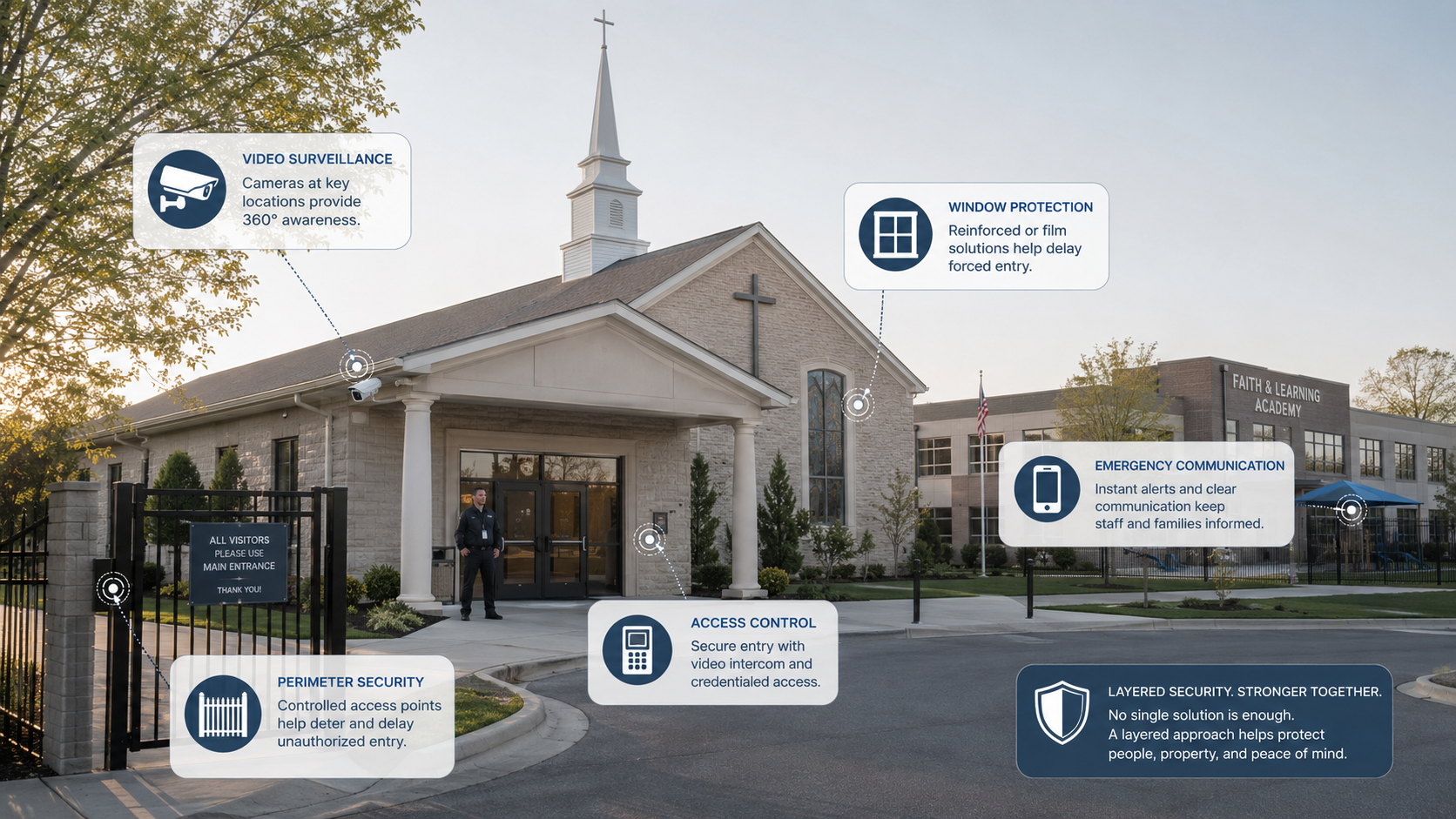
The goal of layered security
No single security measure can stop every threat.
A layered church-security plan should instead improve the organization’s ability to:
- Identify concerning activity earlier.
- Create distance between public areas and occupied buildings.
- Delay unauthorized access.
- Reduce exposure through vulnerable windows and doors.
- Alert staff and emergency responders quickly.
- Secure occupied areas.
- Communicate clear instructions.
- Provide immediate medical assistance when needed.
Some layers may help prevent an attack from progressing. Others may provide only a few additional seconds.
In an emergency, those seconds can matter.
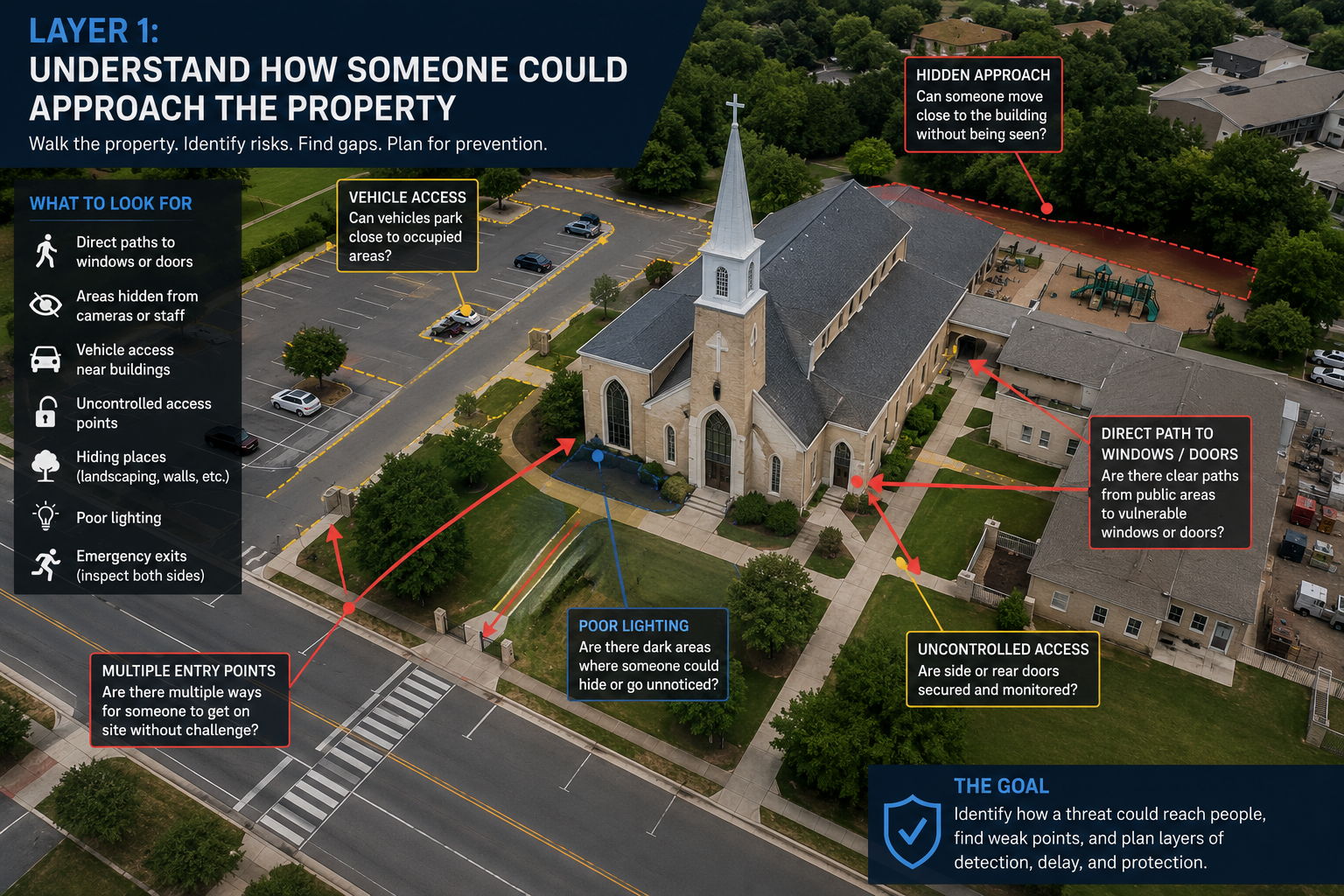
Layer 1: Understand how someone could approach the property
A church-security assessment should begin outside the building.
Walk the property as though you have never visited it before. Look at every route that leads from a street, sidewalk, neighboring property or parking lot toward an occupied space.
Questions should include:
- Can someone walk directly to sanctuary or classroom windows without being observed?
- Are there exterior areas hidden from cameras or staff?
- Can vehicles park close to heavily occupied rooms?
- Are school and public church areas separated during school hours?
- Are playgrounds protected from unrestricted public access?
- Can someone enter from an adjoining property?
- Are trees, walls or landscaping creating hiding places?
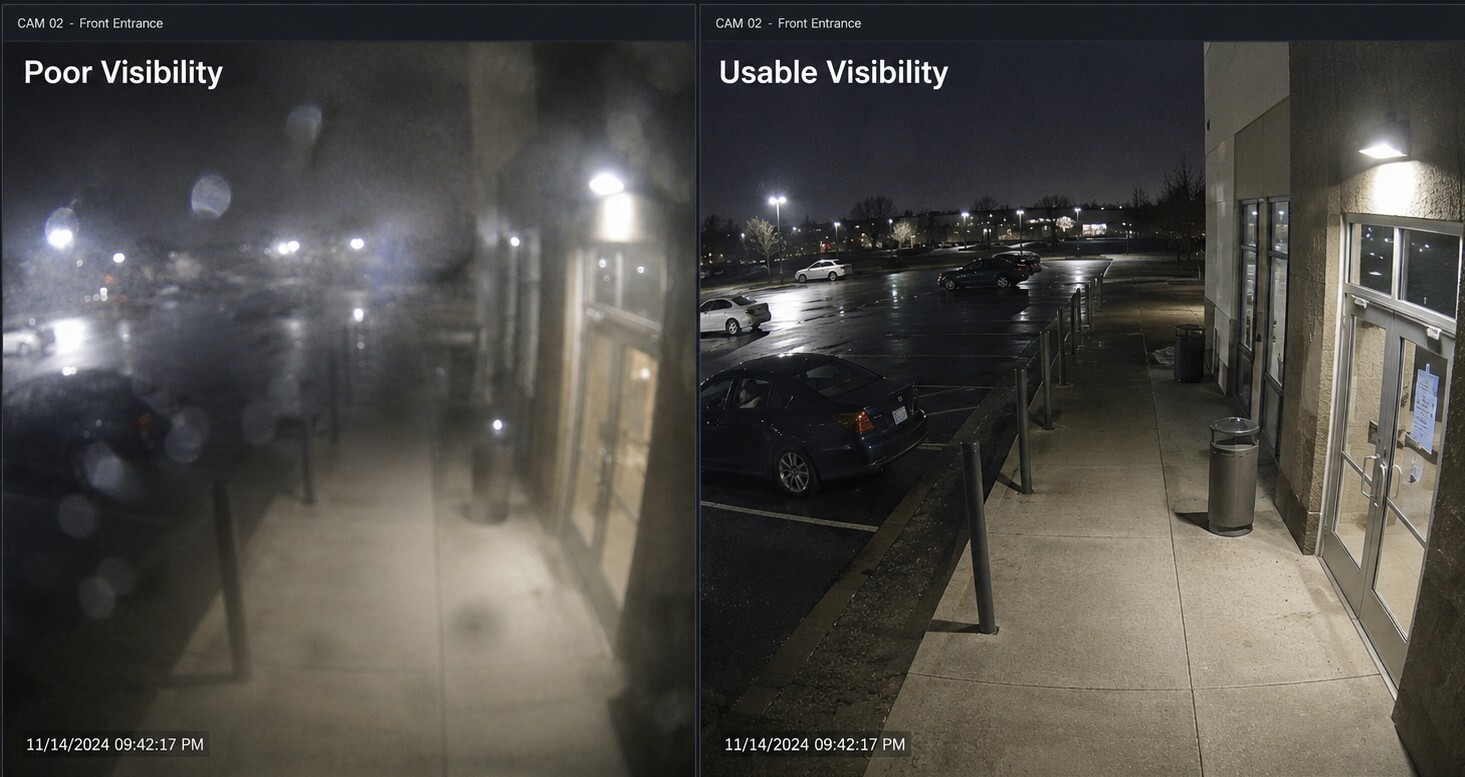
- Does exterior lighting provide usable visibility after dark?
- Are emergency exits inspected from both sides?
The goal is not to make a church look hostile or unwelcoming. The goal is to understand where openness has unintentionally created risk.
Layer 2: Use fencing and gates to create distance and guide movement
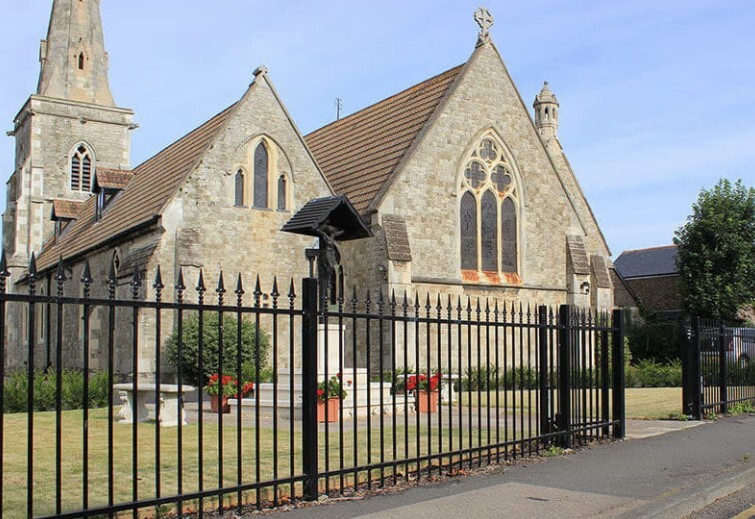
Security fencing cannot guarantee that an attacker will not reach a church. It can create stand-off distance, guide visitors toward observable entrances and make it harder for an unknown person to move directly from a public area to a school or sanctuary.
A well-designed perimeter may include:
- Fencing around school and childcare areas
- Controlled pedestrian gates
- Vehicle gates during school hours
- Clear separation between public church access and school access
- Bollards or barriers near occupied buildings
- Landscaping that directs people toward designated entrances
- Camera coverage at each gate
- Emergency gates that support safe evacuation
Our partners offer perimeter fencing designed for settings including schools, parks and public spaces. Any fencing system should be selected around the property’s actual risk, appearance, traffic flow and emergency-egress requirements.
Fencing should not create new hazards. Gates must not interfere with fire-code-compliant evacuation, emergency responder access or accessibility requirements.
The purpose is to add observation and delay, not trap people inside.
Layer 3: Detect visible firearms before they reach the building
Traditional security cameras are often used after an incident. Someone reviews footage, determines what happened and provides video to law enforcement.
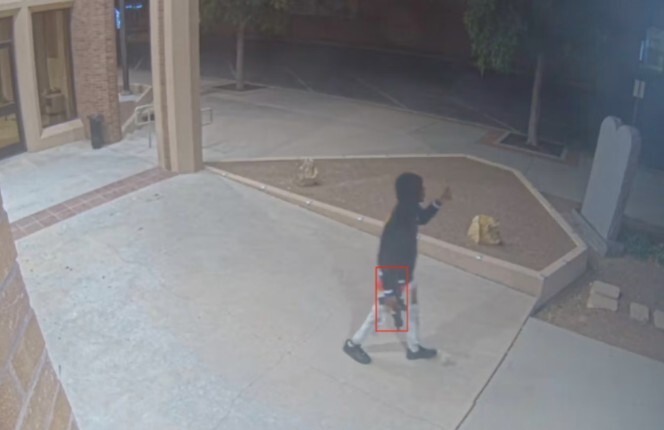
AI-based visual firearm detection can add a proactive layer.
ZeroEyes software works with compatible security cameras to identify visible, brandished firearms. Potential detections are reviewed by trained analysts before human-verified alerts are sent to designated security personnel or emergency responders. The technology can be applied to selected interior and exterior camera feeds, including parking lots and other campus approaches.
For a church or faith-based school, potential camera locations may include:
- Parking-lot entrances
- Pedestrian approaches
- Drop-off and pickup areas
- Courtyards
- Side and rear building approaches
- Areas outside vulnerable sanctuary windows
- Playgrounds and athletic areas
- Main-entry queuing areas
ZeroEyes is not facial recognition, and it does not identify concealed weapons. The firearm must be visible within a useful camera view. Historical events have shown this is still valuable, as many shooters bring firearms from vehicles parked in a lot with weapons visable as they enter a property.
It also cannot create time that does not exist.
The value of exterior firearm detection depends on whether the weapon becomes visible before the attack, whether the camera has a usable image and whether the organization has a clear response plan once an alert is received.
That makes camera placement just as important as the analytics.
Layer 4: Protect vulnerable windows and walls
The Annunciation attack makes window exposure impossible to ignore.
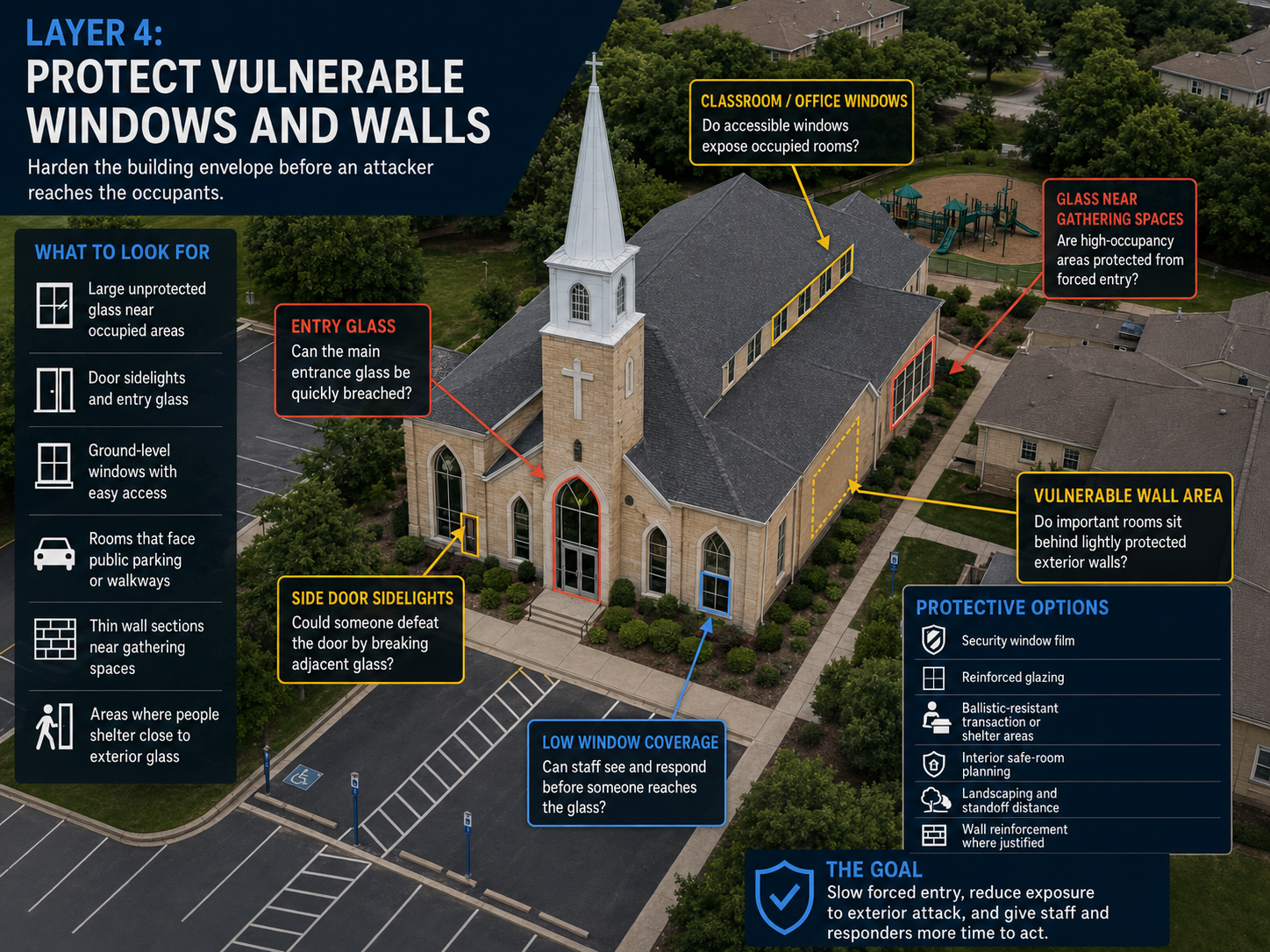
Many churches have large windows, stained glass, historic architectural features or classrooms located along exterior walls. These areas may be difficult or expensive to modify, but they still need to be evaluated.
Possible improvements may include:
- Ballistic-rated window assemblies in selected high-risk locations
- Ballistic-resistant wall panels
- Forced-entry-resistant glazing
- Security film with a properly designed attachment system
- Interior architectural barriers
- Protective window coverings
- Changes to room layouts and seating
- Landscaping or fencing that increases distance from windows
FSJ Tactical provides ballistic-resistant solutions for walls and windows, including products intended for installation in existing buildings.
Not every window needs the same treatment. A qualified assessment should identify the windows that face public sidewalks, parking areas, uncontrolled property lines or locations where someone could remain close to an occupied room.
It is also important to understand the difference between products.
Standard security film should not automatically be described as bullet resistant. Film may help hold broken glass together and delay forced entry when installed as part of an appropriate system. Ballistic protection requires a tested assembly designed for the expected threat level.
Historic appearance, fire codes, framing, attachment methods and structural conditions must all be considered before selecting a solution.
Layer 5: Screen people entering through controlled entrances
While the Annunciation attacker reportedly fired from outside, other attacks and weapons incidents involve a person carrying a concealed weapon through a public entrance.
This is where weapons screening can become another layer.
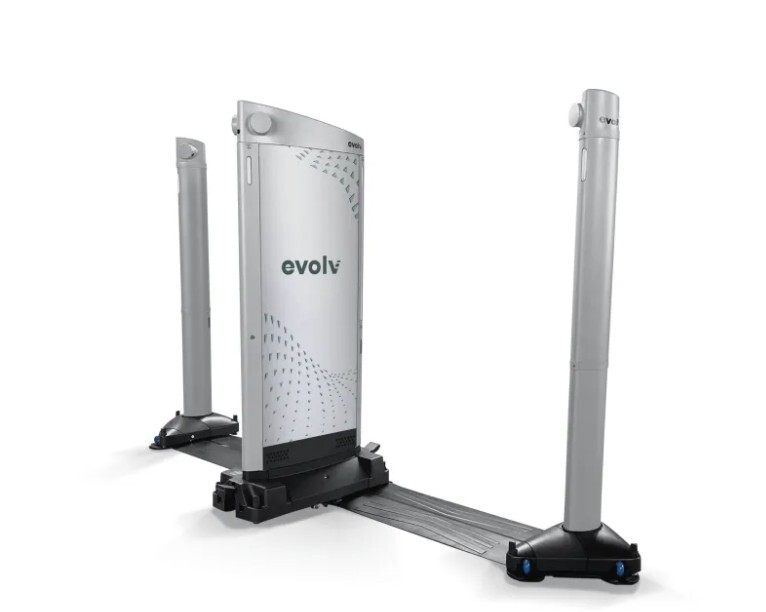
Evolv Express is a walk-through weapons-detection system designed to identify potential concealed firearms and other metallic weapons while allowing people to move through at a normal walking pace. The system provides operators with guidance about who triggered an alert and where the potential item may be located.
For a church, Evolv may be considered for:
- Large weekly services
- School Masses
- Holiday services
- Conferences
- Concerts
- High-profile events
- Large faith-based campuses
- Events with controlled public entrances
It would not be the right solution for every congregation.
Weapons screening requires trained operators, an alert-resolution process, secondary screening procedures and a plan for what happens when a weapon is identified. A church must also decide how screening will affect hospitality, volunteers, staffing and arrival patterns.
Most importantly, entrance screening protects the entrance where it is deployed. It does not replace exterior detection, window protection, access control or trained personnel.
Evolv itself states that no security solution stops all threats and recommends combining people, processes and technology.
Layer 6: Connect cameras, doors, alarms and lockdown procedures
Security technology becomes more useful when the different parts of the system work together.
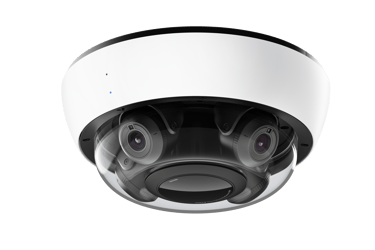
A platform such as Verkada can combine video surveillance, access control, video intercoms, alarms, panic buttons and emergency-response tools within one management environment.
A church and school campus could use that platform to:
- Monitor exterior approaches and vulnerable windows
- Keep secondary doors locked
- Provide video intercom access at the main entrance
- Alert staff when a door is forced or held open
- Issue credentials to employees and approved volunteers
- Initiate a full or partial lockdown
- Activate an emergency response from a mounted panic button
- Secure selected classroom or office doors
- Share relevant camera feeds with law enforcement
- Use horn speakers or other communication tools to deliver instructions
Verkada’s lockdown tools can be activated from supported panic buttons, smartphones or web browsers. Authorized users can secure selected doors, receive lockdown alerts and share camera streams with law enforcement from the Command platform.
The technology still requires planning.
A panic button is not useful if employees do not know what it activates. A lockdown system can create confusion if no one has decided whether to lock the entire property or only a specific building. An intercom does not solve a security problem if side doors remain propped open.
The organization should document:
- Who can initiate a lockdown
- Which doors will lock
- Which doors must remain available for evacuation
- Who calls 911
- Who communicates with teachers, volunteers and parents
- How responders enter the property
- What happens if internet or power service is interrupted
- How the system is tested
Technology should support the emergency plan, not replace it.
Layer 7: Train people to recognize and respond to threats
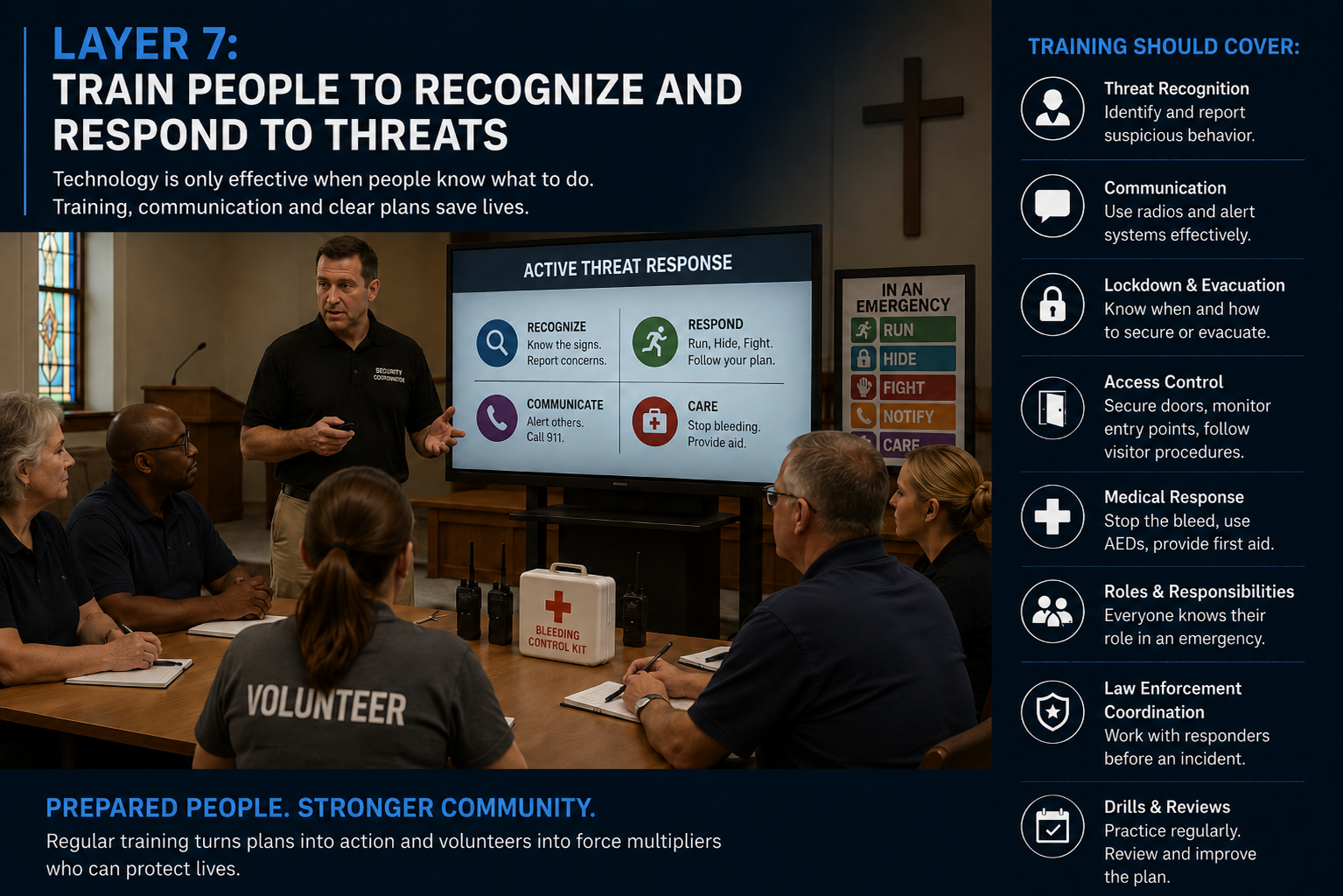
Churches rely heavily on volunteers. That can be a strength, but it can also create inconsistent security practices.
Someone serving as a greeter one week may have no security role the next. Staff may use different radios, door procedures or emergency language. New volunteers may not know which entrances should remain locked.
A trained security ministry or designated response team can help establish consistency.
Training may cover:
- Recognizing concerning behavior
- Reporting suspicious activity
- De-escalation
- Emergency communications
- Lockdown and evacuation
- Exterior property checks
- Radio procedures
- Medical response
- Parent and child reunification
- Interaction with responding law enforcement
- Procedures for armed security, where legally permitted and properly managed
CISA provides houses of worship with no-cost security-assessment and active-shooter preparedness resources. Its guidance stresses planning, training and a whole-community approach rather than depending entirely on physical equipment.
Church leaders should also arrange periodic walkthroughs with local police, fire and emergency medical personnel. Responders should know the property layout, door numbering, access points, utility locations and areas where children gather.
Layer 8: Prepare for the first minutes after an injury
Security planning should not stop at detection and lockdown.
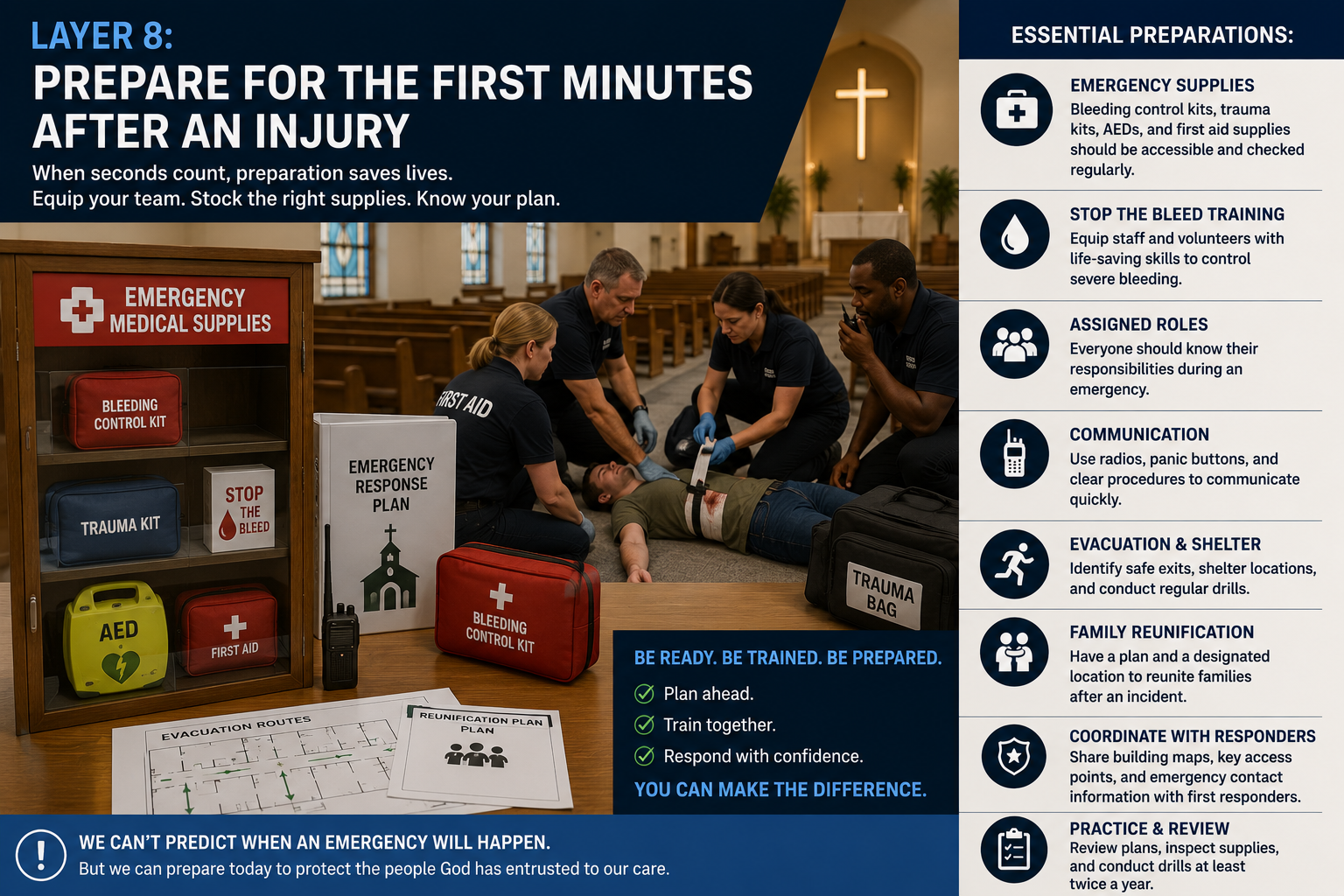
Active-threat incidents may unfold before medical responders can safely reach every injured person. Churches should consider placing emergency supplies where trained staff can reach them quickly.
Preparedness may include:
- Bleeding-control kits
- Trauma kits
- Automated external defibrillators
- Stop the Bleed training
- Clearly marked emergency supplies
- Personnel assigned to guide responders
- Accurate room and door numbering
- Family reunification procedures
- Emergency contact and accountability systems
The organization should know who is trained, where supplies are stored and who is responsible for checking expiration dates and replacing used items.
A locked cabinet that no one can access during an emergency is not a plan.
Lessons from other church and school attacks
Every attack is different.
Some begin outside. Others begin after someone enters through an unsecured door. Some involve a person known to the organization. Others involve concealed weapons, domestic disputes, vandalism, arson or targeted violence against a faith community.
The lesson is not that every church needs every available security product.
The lesson is that a security plan must consider more than one scenario.
A small rural church may need better lighting, door hardware, cameras, radios and emergency planning.
A large church with a school may need controlled gates, access control, exterior gun detection, lockdown capabilities and window reinforcement.
A high-attendance campus may also need weapons screening and professional security personnel.
The correct plan depends on the people, property, ministries, schedule and risks of that specific organization.
What a church-security assessment should review
A useful assessment should examine the entire property and its operations, including:
- Public roads and neighboring properties
- Vehicle and pedestrian approaches
- Parking areas and drop-off traffic
- Exterior lighting and landscaping
- Fencing and gates
- Doors, locks and emergency exits
- Windows and exterior walls
- Camera placement and image quality
- Access-control procedures
- Visitor management
- School and childcare separation
- Weapons-detection options
- Panic and duress devices
- Lockdown procedures
- Emergency communication
- Medical preparedness
- Volunteer and staff training
- Law-enforcement coordination
- Power, network and communication backup
The assessment should not begin with a predetermined product list.
It should begin with how the church operates, how people move through the property and how different threats could approach or affect occupied areas.
Building security without losing the church’s identity
Churches are intended to welcome people.
Security measures that are poorly designed can create fear, interfere with ministry or make visitors feel suspected before they walk through the door.
That does not mean the only choices are openness or security.
A thoughtful plan can preserve hospitality while reducing unnecessary access, increasing awareness and preparing staff to act.
Cameras can be positioned discreetly. Fencing can complement the property. Controlled entry can be paired with trained greeters. Weapons screening can be used only during selected events. Window protection can be prioritized instead of applied indiscriminately.
The objective is not to turn the church into a fortress.
It is to remove avoidable weaknesses while protecting the people who trust the organization with their worship, work and children.
Frequently Asked Questions
Would one security product have prevented the Annunciation shooting?
No one can reliably say that a specific product would have prevented the attack. Exterior cameras, visual firearm detection, perimeter controls, window protection, emergency communication and trained personnel could each provide an additional layer, but no individual measure guarantees prevention.
Does every church need weapons screening?
No. Weapons screening may make sense for larger churches, faith-based schools, high-attendance events or facilities with identified threats. Smaller churches may receive more immediate value from improving doors, exterior cameras, lighting, communication and emergency planning.
Can ZeroEyes Visual AI gun detection or Evolv weapon detection identify a concealed firearm?
Visual firearm detection is intended to identify a visible weapon within a camera’s view. It does not replace concealed-weapons screening at a controlled entrance. For concealed firearms and explosives, a system like Evolv may be good fit. Evolv requires guests to walk through the system, much like a metal detector, but it will only flag if weapons are detected on the person or inside of a bag. These two systems serve similar purposed but are used in different ways and can be integrated to work together, along with cameras, access control and other physical security systems.
Does security window film make glass bulletproof?
Not automatically. Standard film may help hold broken glass together or delay forced entry when installed correctly. Ballistic protection requires a tested window assembly or product designed for the required protection level. There are ballistic products that can make glass bullet resistant up to a .45 caliber and beyond.
Should churches keep every exterior door locked?
Churches should limit normal entry to designated, observable locations while preserving code-compliant emergency exit. Exact procedures should reflect the building, service schedule, school operations and applicable fire and life-safety requirements.
Is Your Church Security Plan Focused Only on the Front Door?
The Annunciation attack demonstrated that a threat may never attempt to enter through the primary entrance.
Auvra helps New Mexico churches, faith-based schools and religious organizations evaluate the full property, including parking areas, exterior approaches, windows, doors, classrooms, worship spaces, cameras, access control, weapons detection, fencing, gates, emergency communication and response procedures.
Depending on the organization’s needs, solutions may include technologies from Verkada, ZeroEyes, Evolv and FSJ Tactical, combined with appropriate physical improvements, installation and operational planning. Auvra assists with coordinating manufacturer and solution providers.
A security review should not begin with selling equipment. It should begin with understanding the property and identifying the most important risks. Financing, Federal and Local grants are also available.
Request a Church Security Assessment
Explore Auvra Security Assessments
Editor’s note: This article discusses a tragic act of violence for the purpose of helping churches and faith-based schools evaluate security planning. It does not claim that any specific technology would have prevented the Annunciation attack. Security measures should be selected through a site-specific assessment and coordinated with appropriate public-safety, legal, insurance and life-safety professionals.