
 By
By
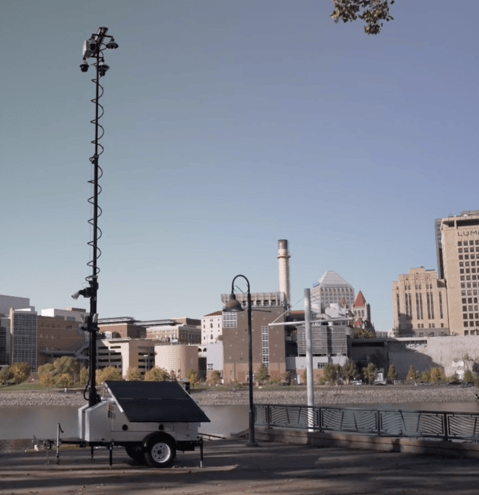
A construction site needs cameras next week.
A utility yard has no network connection.
A parking lot has become a recurring security problem.
A commercial property needs better exterior coverage, but it is not going anywhere.
All four situations may need video security, but they do not necessarily need the same solution.
Organizations considering outdoor surveillance generally have three paths:
- Rent a mobile security trailer
- Purchase a mobile security trailer
- Install permanent hardwired cameras
There is no universal winner.
A rental can be the smartest choice for a three-month construction project and a poor choice for a site that will need surveillance for the next five years. Purchasing a trailer may make sense for an organization that can move it between projects. Permanent cameras may provide the strongest long-term value when the property, infrastructure, and coverage requirements are stable.
The right decision starts with one question:
Is the security problem temporary, mobile, or permanent?
Quick comparison: rent, purchase, or install fixed cameras?
| Consideration | Trailer rental | Trailer purchase | Fixed cameras |
|---|---|---|---|
| Initial investment | Lowest | Highest | Varies by infrastructure |
| Deployment speed | Fast | Fast once received | Requires installation |
| Mobility | Excellent | Excellent | None |
| Best for short projects | Excellent | Usually unnecessary | Usually not |
| Best for recurring deployments | Can become expensive | Excellent | Site-specific |
| Permanent property coverage | Usually expensive long term | Possible, but may be excessive | Excellent |
| Requires existing power/network | Usually no | Usually no | Usually yes |
| Can move when risks change | Yes | Yes | No |
| Creates an owned asset | No | Yes | Yes |
| Customization | Limited by rental fleet | High | High |
| Long-term operating economics | Weak for continuous use | Strong when repeatedly deployed | Often strongest for permanent sites |
The important distinction is not whether a trailer is “better” than a camera mounted to a building.
They solve different problems.
Option 1: Rent a Mobile Security Trailer
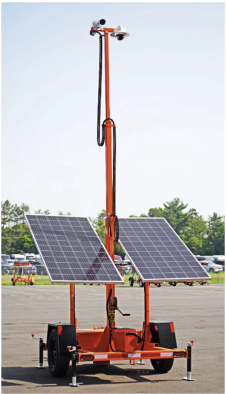
A mobile security trailer rental can be one of the fastest ways to add temporary surveillance to a property without investing in permanent infrastructure or purchasing equipment that may only be needed for a few months.
Auvra can help customers source and coordinate rental surveillance trailers through established rental partners such as Street Smart.
Depending on the project and available rental fleet, larger surveillance trailers may provide features such as:
- Elevated camera coverage
- PTZ and panoramic cameras
- Solar and battery power
- Cellular communications
- Remote video access
- Audible talk-down
- Strobes and visible deterrence
- Alarm monitoring
- Professional response services
Rental configurations vary by location, project requirements, duration, and fleet availability. Not every rental trailer includes the same cameras, monitoring, power system, or communications package, so the configuration should be reviewed before choosing a unit based only on monthly price.
Auvra does not currently maintain an owned fleet of Verkada MT81 or Mobile Pro Systems trailers for short-term rental. Those platforms can instead be evaluated as purchase options when ownership makes more financial or operational sense.
When does renting a security trailer make sense?
Rental can be a strong fit for:
- Construction projects
- Temporary storage yards
- Vacant properties
- Special events
- Short-term vandalism or theft problems
- Parking areas requiring temporary coverage
- Disaster recovery
- Sites waiting for permanent cameras
- Seasonal operations
- Locations where future security needs are uncertain
The biggest advantage: fast coverage without a major capital purchase
Consider a construction site that needs surveillance for six months but has no permanent network, limited electrical infrastructure, and a site layout that will change throughout the project.
Installing poles, trenching cable, extending fiber, building a network, and purchasing permanent cameras may not make sense yet.
A rental trailer can provide surveillance and deterrence during construction, then leave when the project is complete.
There is no unused equipment to store and no need to determine where the trailer goes next.
The biggest disadvantage: rental expense continues as long as the trailer stays
Rental economics work well when the need is truly temporary.
The calculation changes when projects keep getting extended.
A three-month deployment becomes six months. Six months becomes a year. Another project begins immediately afterward and requires another trailer.
At that point, the organization should compare:
continued rental expense
against
the cost of purchasing and financing a trailer that can be redeployed.
There is no universal break-even point. Rental rates, equipment configurations, shipping, monitoring, financing, maintenance, and anticipated utilization all affect the calculation.
The important point is to revisit the decision before automatically signing another long-term extension.
Rental is usually strongest when the project has a real end date
Rental generally makes sense when:
- The deployment is temporary.
- The expected end date is reasonably predictable.
- Security is needed quickly.
- Permanent infrastructure is unavailable or impractical.
- The site layout will continue changing.
- The organization has no planned use for the equipment afterward.
- Avoiding a large capital purchase is important.
For example, a contractor protecting one nine-month project may be better served by a Street Smart rental than by purchasing a mobile platform with no planned use after construction is finished.
The calculation may look very different for a contractor running multiple projects throughout the year.
Option 2: Purchase a Mobile Security Trailer
Purchasing becomes more attractive when mobile surveillance is not a one-time problem.
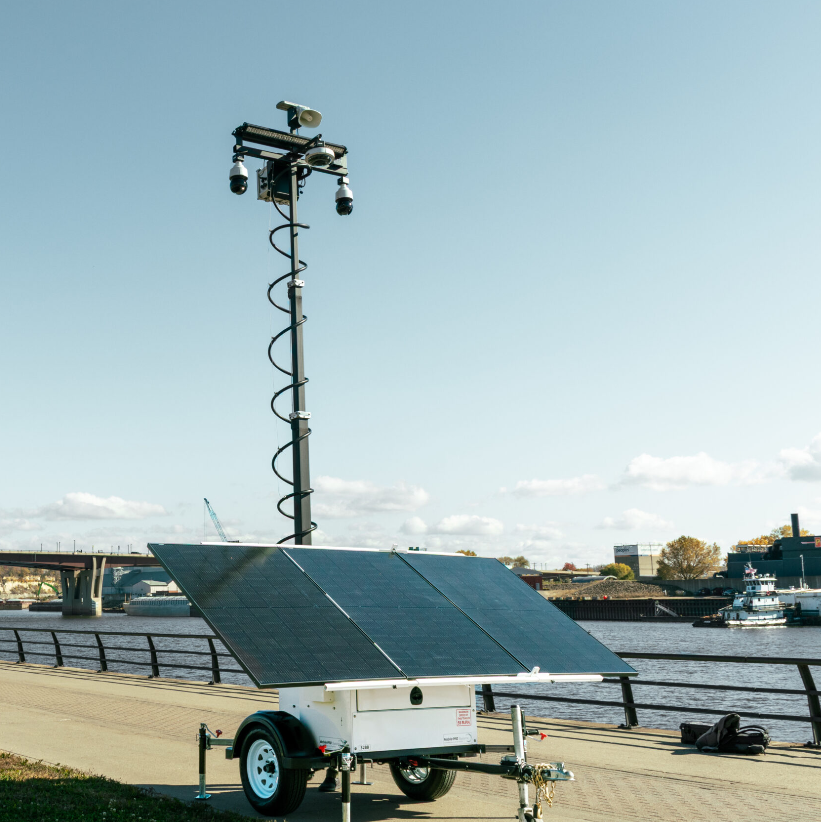
Auvra can help organizations evaluate purchased surveillance platforms including Mobile Pro Systems solutions, Verkada-based mobile configurations, and the Verkada MT81, depending on the application.
Instead of paying for temporary access to someone else's equipment, the organization acquires a security asset it can redeploy.
Ownership can make sense for:
- General contractors
- Utilities
- Municipalities
- School districts
- Critical infrastructure
- Property-management companies
- Law enforcement
- Large commercial organizations
- Organizations that repeatedly rent mobile surveillance
- Businesses with multiple remote locations
The biggest advantage: the trailer can follow the problem
Consider a contractor with several active construction projects.
A trailer may spend six months at one project, move when the building becomes secure, and immediately begin protecting another site.
The equipment belongs to the organization rather than to one particular project.
A municipality may use the same trailer very differently. It could be deployed at a park, moved to a special event, relocated to a dumping hotspot, and later positioned at a public works facility.
That mobility creates value that permanent cameras cannot provide.
Ownership provides more control over the configuration
Rental equipment is generally limited to what is available in the provider's fleet.
Purchasing allows the system to be designed around the organization's needs.
Depending on the platform, options may include:
- Verkada cameras
- PTZ cameras
- Panoramic coverage
- License plate recognition
- Thermal cameras
- Video alarms
- Horn speakers
- Audible talk-down
- Cellular connectivity
- Starlink connectivity
- Larger battery capacity
- Solar power
- Generator backup
- Network equipment
- Integration with an existing security platform
For organizations already using Verkada, this creates several possibilities.
A customer may consider a purpose-built Verkada MT81 or a configurable mobile platform such as the Mobile Pro Systems Falcon or Commander, designed around Verkada technology.
The right platform depends on how many cameras are needed, desired coverage, power requirements, connectivity, mobility, and how the trailer will be used over its lifetime.
The downside: ownership comes with responsibilities
Purchasing eliminates rental payments, but it does not eliminate operating expenses.
Owners should consider:
- Delivery
- Insurance
- Storage when not deployed
- Battery maintenance
- Solar equipment
- Generator service when equipped
- Tires and trailer components
- Cellular or satellite connectivity
- Camera licensing
- Periodic inspections
- Future upgrades
For organizations that use the trailer regularly, those costs may still compare favorably with years of rental expense.
For an organization that needs a trailer once every five years, they probably will not.
Financing can change the ownership calculation
A mobile surveillance trailer does not necessarily have to be purchased entirely with cash.
Qualified customers may be able to finance eligible security equipment and spread the purchase over predictable payments.
This creates a comparison worth making:
What will we pay each month to continue renting?
versus
What would we pay each month to finance equipment we eventually own?
Financing can be especially attractive when an organization has recurring projects but wants to preserve capital for other operations.

Option 3: Install Permanent Hardwired Cameras
Mobile security trailers are highly visible, flexible, and relatively fast to deploy.
But for a permanent property with reliable power and network infrastructure, fixed hardwired cameras may provide the strongest long-term solution.
Permanent cameras are typically a better fit for:
- Commercial buildings
- Warehouses
- Manufacturing facilities
- Schools
- Churches
- Municipal buildings
- Healthcare facilities
- Apartment communities
- Permanent parking lots
- Retail locations
- Cannabis facilities
- Offices
- Multi-building campuses
Fixed cameras become part of the property
A permanent system can be designed specifically around the building and the risks being addressed.
Cameras can be positioned at:
- Entrances and exits
- Building corners
- Loading docks
- Parking areas
- Gates
- Vehicle entrances
- Interior corridors
- Cash-handling areas
- Restricted rooms
- Warehouses
- Perimeter fencing
The objective is not simply to install as many cameras as possible.
It is to select the right camera and place it where the required image can actually be captured.
Hardwired cameras often make more sense for long-term coverage
If a property will need surveillance for the next five, ten, or fifteen years, leaving a rental trailer parked outside indefinitely is usually difficult to justify.
Running structured cabling, providing PoE power, and permanently installing cameras creates infrastructure that can support the property for years.
Modern camera platforms can also eliminate some of the infrastructure traditionally associated with fixed surveillance.
For example, Verkada cameras use onboard recording storage rather than requiring a conventional central NVR for standard deployments. Cameras can continue recording locally during an internet interruption as long as the camera and supporting network equipment retain power.
That distinction matters.
Permanent cameras do not have to mean a traditional NVR system or servers.
An organization can have hardwired cameras while still benefiting from:
- Cloud-based management
- Onboard recording
- Remote access
- AI-powered analytics
- Centralized administration
- Automatic software updates
- Long manufacturer warranties
- Integration with access control and alarms
The downside: fixed cameras cannot follow the problem
A permanently mounted camera is exactly that. Permanent.
If conditions change, relocating the camera may require:
- New cable
- New conduit
- Lift access
- Network changes
- Mounting hardware
- Additional labor
That makes permanent cameras strongest when the property is stable and the desired coverage is reasonably predictable.
Sometimes the Best Answer Is Both
Auvra does not view trailers and permanent cameras as competing technologies.
In many cases, the strongest design uses both.
Consider a manufacturing company constructing a new warehouse on an existing campus.
The occupied buildings may already have permanent hardwired cameras.
The construction area, however, may have:
- No permanent network
- Limited power
- Changing access routes
- Contractors working after hours
- Valuable material stored outside
A mobile trailer can protect the temporary construction zone while the permanent system continues protecting the occupied campus.
Once construction is finished, permanent cameras are installed on the new building and the trailer is returned or moved to another project.
This avoids forcing one type of equipment to solve every problem.
What About Solar Pole-Mounted Cameras?
There is also a middle ground between a trailer and a building-mounted camera.
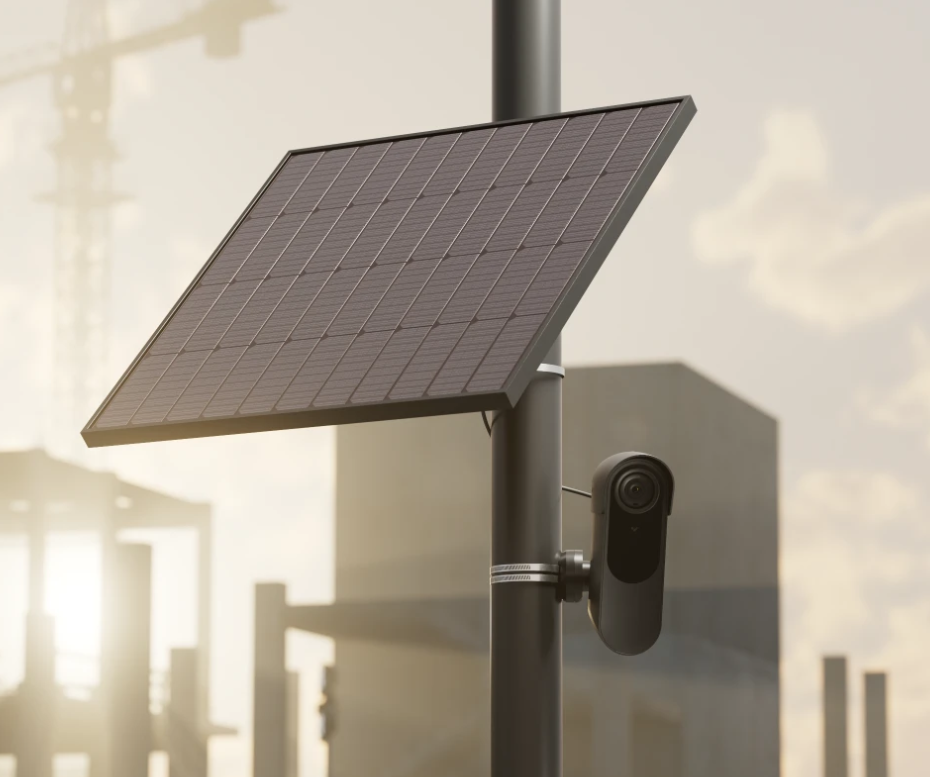
Solar or self-powered camera platforms can provide permanent or semi-permanent surveillance where trenching electrical and network infrastructure would be expensive.
These systems can be useful for:
- Parking lots
- Utility substations
- Gates
- Remote yards
- Perimeters
- Large campuses
- Areas without nearby buildings
- Locations where trenching would be disruptive
A pole-mounted solar platform may make more sense when the camera needs to remain in approximately the same location but site infrastructure is limited.
Not every remote camera problem requires wheels.
How Should You Compare the Actual Cost?
Do not compare only the monthly trailer rental rate against the price of one camera.
Compare the complete deployment.
Trailer rental costs may include:
- Rental rate
- Initial deployment period
- Extension rates
- Delivery
- Setup
- Camera configuration
- Monitoring
- Cellular connectivity
- Alarm response
- Return freight
- Taxes
- Damage responsibility
Trailer purchase costs may include:
- Trailer platform
- Cameras
- Licensing
- Connectivity
- Solar system
- Batteries
- Backup generator
- Shipping
- Financing
- Insurance
- Maintenance
- Expected useful life
Fixed camera costs may include:
- Cameras
- Licensing
- Cabling
- PoE switches
- Fiber
- Conduit
- Trenching
- Poles
- Lifts
- Network upgrades
- Installation labor
- Long-term maintenance
Only after all of those costs are considered can the options be compared fairly.
Do Not Overlook Deterrence
A mobile surveillance trailer is intentionally visible.
An elevated mast, cameras, warning signage, strobes, and audible talk-down can send a very different message than a small dome camera mounted on the corner of a building.
At locations experiencing theft, vandalism, dumping, trespassing, or after-hours activity, that visible presence may be valuable.
Permanent cameras can also support deterrence, especially when paired with signage, video alarms, speakers, access control, and good lighting.
The right question is what the organization needs the system to accomplish:
- Record evidence
- Identify people or vehicles
- Detect activity
- Alert someone in real time
- Visibly discourage unwanted behavior
- Allow remote intervention
- Support professional monitoring
Different projects may prioritize those objectives differently.
Five Questions to Ask Before Deciding
1. How long will we need coverage?
Three months and three years should result in very different financial discussions.
2. Will the security problem move?
If risk follows construction projects, special events, or changing operations, mobility has real value.
3. Does the property already have power and network infrastructure?
If not, determine what infrastructure would cost before assuming permanent cameras will be cheaper.
4. What happens when this project ends?
If another property will immediately need the equipment, purchasing becomes much more attractive.
5. Are we solving a temporary problem or building permanent security infrastructure?
A trailer can solve an immediate surveillance problem.
It should not automatically replace permanent cameras, alarms, access control, or other building security where those systems are appropriate.
Frequently Asked Questions
Does Auvra rent mobile security trailers?
Auvra can help customers source and coordinate mobile surveillance trailer rentals through rental partners such as Street Smart. Available equipment may include larger surveillance trailers with elevated cameras, autonomous power, communications, monitoring, and deterrence capabilities.
Rental configurations and availability vary by project and location.
Auvra does not currently maintain an owned fleet of Verkada MT81 or Mobile Pro Systems trailers for short-term rental. Those platforms can instead be evaluated as purchase options when ownership makes more financial or operational sense.
Is it better to rent or purchase a security trailer?
Rental generally makes more sense for temporary projects with a defined end date. Purchasing becomes more attractive when an organization expects repeated deployments, regularly rents trailers, needs a customized configuration, or can move the equipment between projects.
The best comparison is the total expected rental expense versus the cost of purchasing, financing, operating, and redeploying an owned trailer. We can provide quotes for both for you to compare.
How long should I rent a security trailer before considering purchase?
There is no universal cutoff. When a rental is repeatedly extended or the organization expects additional projects afterward, it is worth comparing the projected rental expense against ownership.
Are fixed security cameras cheaper than a mobile trailer?
They can be, particularly when power and network infrastructure already exist. If the site requires extensive trenching, electrical work, poles, fiber, or other infrastructure, the cost difference may be much smaller.
Can Verkada cameras be used on a mobile security trailer?
Yes. Verkada offers the MT81 mobile security trailer, and other mobile surveillance platforms such as our Mobile Pro Commander or Falcon can be designed around Verkada technology when appropriate for the application.
Does a mobile security trailer need power or internet from the property?
Many commercial surveillance trailers are designed to operate independently using solar power, batteries, and cellular or other wireless connectivity. The exact requirements depend on the trailer configuration, camera load, location, weather, and expected operating conditions.
Can a security trailer replace permanent cameras?
Sometimes, but that is usually not the best way to view the comparison. Mobile trailers are strongest when mobility, fast deployment, temporary use, or lack of infrastructure matters. Permanent hardwired cameras generally make more sense for stable properties requiring continuous long-term coverage.
Not Sure Whether to Rent, Buy, or Install?
Choosing a surveillance solution should start with the property, expected duration, available infrastructure, and security problem being addressed.
Auvra can help organizations compare:
- Rental surveillance trailers
- Purchased Mobile Pro Commander or Falcon Systems surveillance platforms
- Verkada MT81 security trailers
- Mobile platforms using Verkada technology
- Permanent hardwired Verkada cameras
- Solar and remote camera systems
- Video alarms and audible deterrence
- Cellular and alternative connectivity
- Financing for qualified equipment purchases
For a temporary project, rental may be the simplest and most economical solution.
For an organization that continuously moves between projects, ownership may provide significantly better long-term value.
For a permanent building, parking area, or campus, a properly designed hardwired camera system may provide the strongest value of all.
Auvra's role is to compare those options and help determine which approach makes sense for the property rather than forcing every project into the same solution.
Explore Mobile Surveillance Trailers